Working With Height Exposure in Practice: VR Environments for Professionals
By Equipo clínico VRET
Fear of heights is a frequent reason for consultation, and in vivo exposure is operationally difficult to arrange. Heights were, in fact, the first situation studied with virtual reality exposure in a controlled trial, published by Rothbaum and colleagues in 1995. Three decades later, VR environments let professionals work through balconies, stairways, bridges and glass elevators with fine-grained gradation. This article describes how sessions are usually structured, the role of SUDS ratings, and the points of transfer to real-world situations.
A Common Fear With Uneven Access to Exposure Work
Fear of heights is one of the situations psychologists most often work with through exposure. In clinical classifications it is described as a specific fear of the situational or natural-environment type, and the professional is the one who assesses each case. Its functional impact, although less conspicuous than that of other fears, is not trivial: it can limit access to certain jobs, constrain housing choices and restrict leisure activities.
Graded exposure is the technique most described in the literature for this situation. In vivo exposure is traditionally carried out with stairways, lookout points, terraces, glass elevators and pedestrian bridges, in an ascending sequence. The operational challenge is having a varied repertoire of stimuli near the practice, calibrating height precisely, and maintaining the weekly frequency that inhibitory learning models consider important.
That is why heights were, historically, the first situation studied in a controlled trial of VR exposure. Rothbaum and colleagues published a pilot study in the American Journal of Psychiatry in 1995, comparing VR exposure with a wait-list control. That study opened up the field of virtual reality exposure and remains a standard citation in any historical review.
A note on scope before going further. This article covers the presentation: what the fear of heights looks like, what research has examined, how professionals assess it and when virtual exposure is not the first option. The session-by-session mechanics, with the level matrix and the criteria for advancing or repeating, are developed separately in the step-by-step height hierarchy for VR exposure. If the case is already formulated and what you need are the levels, go straight there.
The Foundational 1995 Study
Rothbaum's trial recruited participants with a clinical fear of heights and assigned them to a VR exposure group (seven sessions over several weeks) or a wait-list. The scenarios reproduced a glass elevator, a bridge and a railed terrace, with progressive height. Outcomes were recorded with self-report measures and a behavioral test.
The authors reported differences in favor of the VR group relative to the wait-list, including on real-world situations not practiced in VR. The study was small and the design still nascent, but it suggested that VR exposure could elicit the fear response and allow habituation in a manner analogous to real-world exposure.
Since then, reviews and meta-analyses by different authors (Parsons and Rizzo 2008, Powers and Emmelkamp 2008, Carl et al. 2019) have examined the use of VR exposure for specific fears, comparing it with control conditions and with in vivo exposure. Heights are still considered a good starting point for introducing VR into practice. None of this research promises a result for any individual case.
When fear of heights is something else
Before building any hierarchy it is worth ruling out that the presenting problem is something else. Three conditions arrive with the same sentence, "I get dizzy when I look down", and only one is usually approached with exposure.
Vestibular vertigo. An illusory sensation of movement, peripheral or central in origin. It does not need height to appear: benign paroxysmal positional vertigo is triggered by changes in head position, typically on turning over in bed. It is usually accompanied by nausea and, depending on etiology, auditory symptoms.
Visual height intolerance. A postural instability response that appears when the visual system loses nearby depth references, which happens naturally on a viewing platform or a bridge. It is far more common in the general population than a clinical fear of heights and is usually mild; only a minority develop significant avoidance.
Clinical fear of heights. The fear is anticipatory and disproportionate, and activates in response to height and only to height.
The most practical discriminator is the timing of the symptom. In a clinical fear of heights the distress begins before arrival: the person is already struggling in the elevator on the way up. In the other two it appears once the physical stimulus is present, and not before. A second useful question is whether it ever happens without height involved; if the answer is yes, the vestibular axis rises in probability immediately.
Some signs warrant medical assessment before starting exposure: vertigo episodes outside height situations, associated auditory symptoms, recent abrupt onset in an adult with no prior history, accompanying neurological symptoms, or falls from genuine loss of balance. These are not criteria for excluding psychological work but criteria about sequence.
The reverse case is also common and worth recognizing: people referred from ENT with the vestibular presentation already resolved and avoidance that now maintains itself. There, exposure is precisely the approach that fits, and much of the early work consists of undoing the belief that the problem "is physical" and beyond psychological help.
Typical Environments and Grading
Height environments used in VR practice and research typically include stairway sections (interior, exterior, spiral), railed balconies at different heights, building terraces, natural lookout points (cliffs, mountains), pedestrian bridges (covered, uncovered), elevated walkways, glass elevators and flat building rooftops.
Grading crosses three dimensions. First, objective height (ground floor, second floor, tenth floor, fortieth floor). Second, degree of exposure (high opaque railing, medium railing, low transparent railing, no railing). Third, the activity demanded (standing still and observing, walking along the edge, leaning over, crouching, simulating a dropped object).
Many professionals start at low levels across all three dimensions and advance in a stepwise fashion. Rapid progression on one dimension without consolidating the others generates SUDS spikes that can jeopardize adherence. A good practice is to hold two dimensions constant while varying the third.
Initial Assessment and Building the Hierarchy
The psychologist's baseline assessment usually includes a structured interview, a specific scale (such as the Acrophobia Questionnaire or the Heights Interpretation Questionnaire), a record of avoidance (which situations have been abandoned in the past year, which plans have been altered because of the fear), and exploration of specific beliefs (fear of jumping voluntarily, fear of falling accidentally, fear of dizziness).
Building the hierarchy is a collaborative process. A common approach is to list between 15 and 20 real situations the patient identifies as feared and rank them by anticipatory SUDS. This list is the reference for designing VR sessions: the virtual environment the professional chooses for each session should correspond to the step due for work, neither excessively low nor too high.
It is worth clarifying from the first session that fear of falling accidentally and fear of jumping voluntarily call for distinct handling. The former is usually approached with graded exposure; the latter, known as l'appel du vide, is usually benign and calls for specific psychoeducation to prevent a catastrophic interpretive spiral.
How Sessions Are Usually Structured
A typical operational sequence includes an assessment-and-formulation session, a psychoeducation-and-headset-adaptation session, as many sessions of graded exposure through the hierarchy as the professional judges necessary, a consolidation session with multiple tasks (leaning over, walking along the edge, simulating a dropped object), and a transfer session with an in vivo exposure plan. The number of sessions varies from person to person and is not something to promise in advance.
Session length usually runs between 45 and 60 effective minutes. Each session includes initial SUDS calibration, a core exposure phase with within-session repetition of the stimulus, and a closing segment recording what was learned. The interval between sessions is typically weekly.
The psychologist records peak SUDS, latency to habituation, intrusive cognitions and observed safety behaviors (gripping the railing, looking at the ground, not approaching the edge). How safety behaviors evolve is one of the main things the professional tracks.
The Role of SUDS Ratings and Patient Predictions
Subjective SUDS is the main rating used during height exposure. It is recorded every one or two minutes during the session and paired with the patient's anticipatory predictions: how much distress they expect, how long they think habituation will take, and what intrusive cognitions they anticipate.
The contrast between prediction and what actually happened is informative for the professional. People often overestimate peak SUDS and underestimate the speed of habituation, which keeps anticipatory avoidance going. Making this pattern explicit in every session supports a cognitive learning process that habituation alone does not provide.
Session closure includes reviewing the predictions, recording the actual observations and reformulating active beliefs. Many authors consider this seemingly minor cognitive component an important part of maintaining what was learned over time.
Safety Behaviors and How to Phase Them Out
Safety behaviors are actions the person performs during exposure to feel safer and that, paradoxically, keep the fear going. With heights, the most frequent are: gripping the railing tightly, avoiding looking at the edge, not approaching the ledge, keeping a preset minimum distance, fixing the gaze on a distant point, regulating breathing solely as a distraction, and mentally repeating reassuring phrases.
These behaviors are not inherently bad; many are reasonable in real situations with objective risk. The problem arises when they are applied indiscriminately in low-risk situations and block the corrective information that exposure should provide. Identifying them explicitly and phasing them out progressively is a core part of the work.
The phase-out is usually approached in three steps. First, identify with the patient the safety behaviors active at each level of the hierarchy. Second, record their frequency during the session. Third, agree with the patient to drop one or two behaviors per session, keeping the rest, until they can face the environment without any of them. This gradualness avoids an excessive surge in distress and supports inhibitory learning.
Transfer to Real-World Situations and Relapse Prevention
Transfer is the ultimate criterion. In vivo tasks are usually planned from the start, consistent with the VR hierarchy: climbing a flight of stairs, leaning over a familiar balcony, crossing a pedestrian bridge. Progression is coordinated with that week's VR session.
A final relapse-prevention session anticipates future situations that could reactivate the fear (a trip, a change of residence, a professional event at height) and designs a re-exposure plan. Some professionals also schedule a follow-up session a few months later.
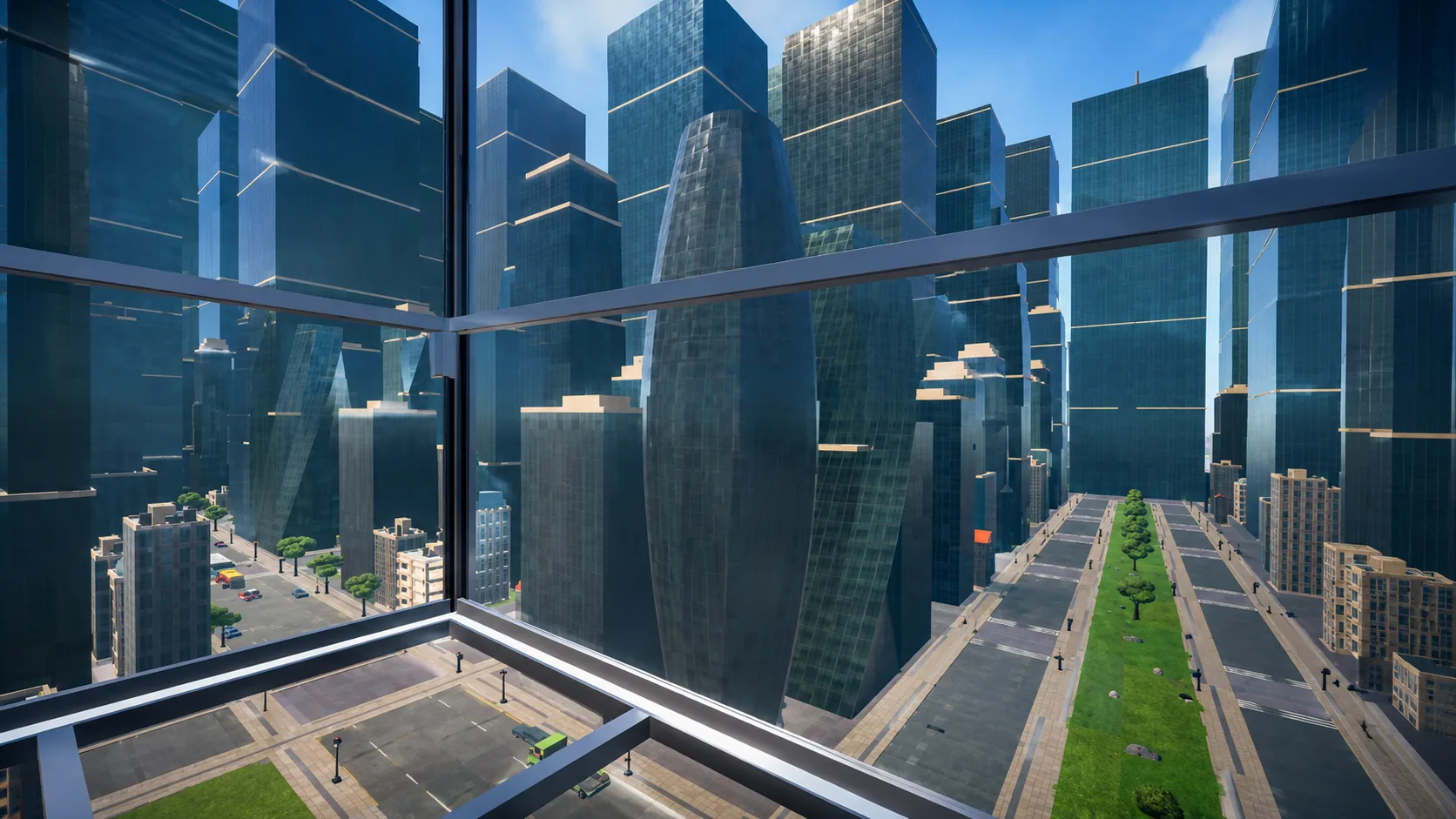
VRET's Heights — Panoramic glass elevator environment offers graduated controls for target floor, glass transparency, floor opacity, distance to the edge, speed, wind sway and time of day, plus open-doors, reset and emergency-exit controls. The professional chooses, adjusts and controls the environment at all times from the panel without leaving the session. If you would like to see how this could fit into your practice, you can book a demo with the team.
This article is for informational purposes for psychology professionals and is not clinical advice for any individual case. VRET is a support tool for professionals. It is not a medical device, does not diagnose or treat any disease and does not replace the judgement of the professional, who is responsible for its use.
Frequently asked questions
How many sessions does VR height exposure usually involve?
There is no fixed number. Sessions are usually weekly and last 45-60 minutes, and how many are needed depends on the initial level of avoidance, the presence of other difficulties and how intra-session habituation evolves. The professional decides, case by case, when to advance, repeat or move to in vivo work.
Can VR height exposure be used without in-person sessions?
Using VR height environments outside the framework of a professional's supervision is not advisable. With the professional present, the hierarchy can be calibrated, safety behaviors managed and transfer planned. The headset alone is a stimulus, not an intervention.
Can it be used with people who have vertigo or vestibular problems?
Vestibular vertigo is a distinct condition from a clinical fear of heights, and it is advisable to rule it out with a prior medical evaluation. Sensitivity to cybersickness during VR can be an obstacle for some people; short initial sessions and frequent pauses usually help.
Is VR exposure enough without in vivo transfer?
In vivo transfer is generally considered necessary to consolidate generalization. VR is a bridge that lowers the initial barrier and allows the response to be rehearsed without physical risk, but the real criterion is the person's ability to face real situations they previously avoided.
Can it be combined with medication?
Standard medication (SSRIs, situational beta-blockers) can coexist with exposure work. Many authors discourage taking benzodiazepines immediately before the session, given their possible interference with inhibitory learning. Decisions about medication rest with the prescribing psychiatrist or physician.
Does the same approach apply to children and adolescents?
Published protocols have mainly been studied in adults. Working with minors requires specific adaptation of the hierarchy, family involvement, a playful framing where appropriate, and informed consent from parents. Additional training in child and adolescent psychology is advisable.
What is the difference between a clinical fear of heights and vertigo?
A clinical fear of heights is an anticipatory, disproportionate fear that activates only in response to height. Vertigo is an illusory sensation of movement, vestibular in origin, which does not need height to appear and is usually triggered by changes in head position. The most practical discriminator in session is timing: with fear of heights the distress starts before arrival; with vertigo it appears with the physical stimulus present.
Keep reading
Fear of Heights vs Vertigo: A Practical Differential for Psychologists
Fear of heights, vestibular vertigo and visual height intolerance get confused in practice. Five intake questions, two questionnaires and clear referral criteria for professionals.
Situations and environmentsFear of Driving After a Crash: Situational Fear or Post-Traumatic Presentation?
Fear of driving after a crash: the criteria professionals use to tell a situational fear from a post-traumatic presentation, what to address first, and how to build the driving hierarchy.
Situations and environmentsEnclosed-Space Exposure Hierarchy: Nine Graded Levels for Professionals
A nine-level hierarchy for working with fear of enclosed spaces, built on two independent axes, the differential with agoraphobia, and a brief format for people referred ahead of an MRI scan.
VRET is a support tool for professionals. It is not a medical device, does not diagnose or treat any disease and does not replace the judgement of the professional, who is responsible for its use.