Driving Phobia After a Crash: Specific Phobia or PTSD?
By Equipo VRET
A patient stops driving after a crash. It can be late-onset driving phobia or post-traumatic stress disorder with driving avoidance, and the treatment plan is not the same. This article sets out the criteria separating the two presentations, what to address first when they coexist, and how to build the driving hierarchy when the origin is one specific, dateable event.
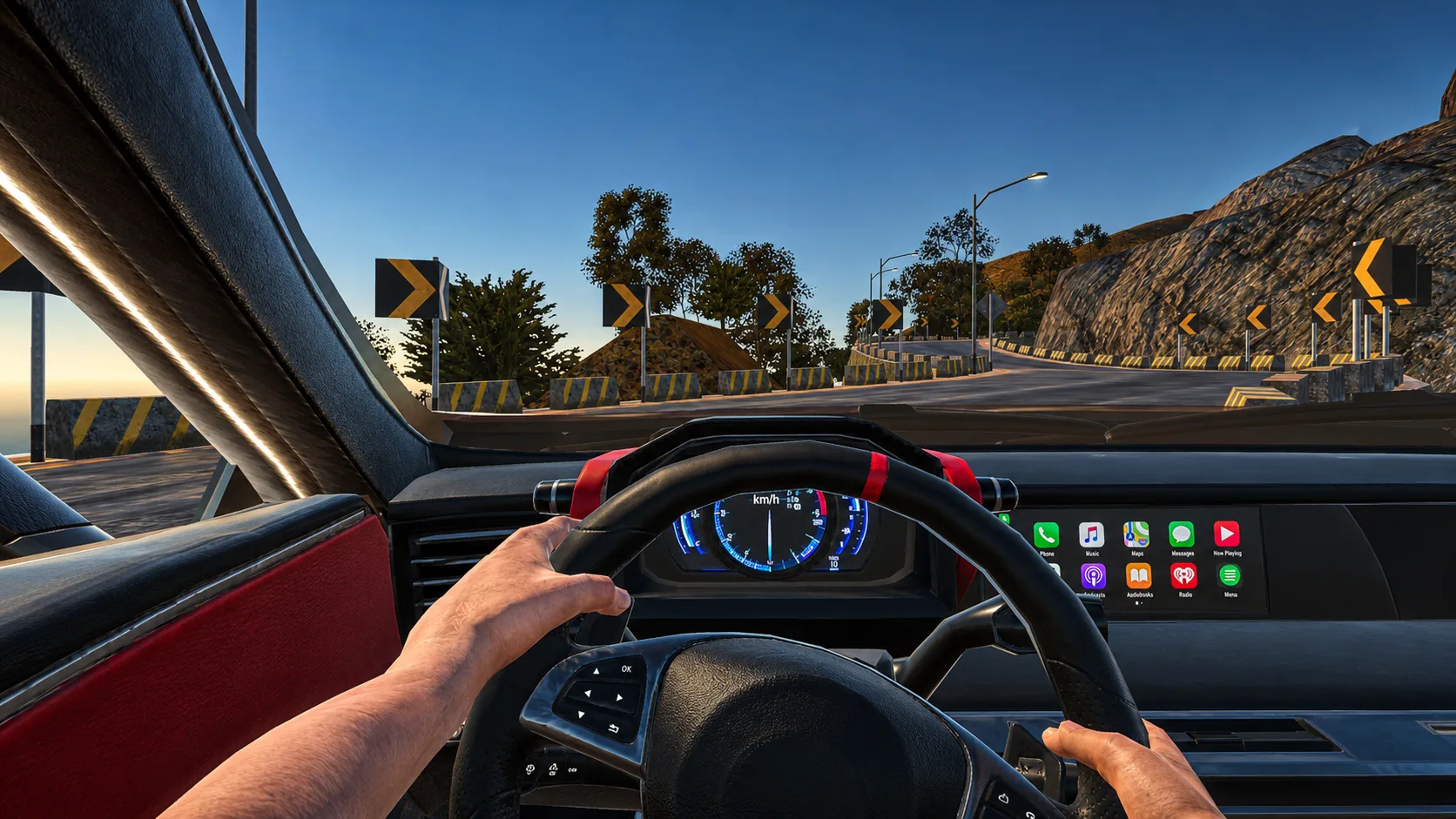
The patient who arrives three months after the crash
It is a recognisable referral. A collision with no serious injuries, or with injuries already resolved, medical discharge, and a patient who still will not get behind the wheel. Sometimes they drive, but only around their own neighbourhood, in daylight, with somebody beside them. They almost always open with the same sentence: "I don't know what's wrong with me, physically I'm fine."
There are two possible presentations here plus a third, mixed one, and the distinction is not academic: it changes what gets treated first, with which technique, and in what order. Driving phobia of traumatic origin is addressed with graded situational exposure. Post-traumatic stress disorder with driving avoidance needs work on the traumatic memory, and a driving hierarchy applied without that usually stalls in the early levels.
The commonest error in this referral is not misdiagnosis: it is not asking. Driving avoidance is so visible and so disabling that it occupies the whole formulation, and re-experiencing symptoms do not surface unless somebody looks for them explicitly.
It is also worth remembering that not all driving phobia comes from a crash. A substantial share of cases arriving in practice have no index event: newly qualified drivers who never consolidated the behaviour, or long-licensed drivers who stopped through disuse and came back to it with a level of arousal they had not expected. That profile is treated as a straightforward situational phobia, and it is covered in the general article on VR exposure therapy for driving phobia.
What separates driving phobia from a post-traumatic presentation
Both presentations share avoidance and physiological arousal in the presence of the stimulus. They separate on what sits around that avoidance.
Points to driving phobia as a specific phobia: the fear is future-oriented, anticipatory, and organised around the probability of another crash. The patient can talk about the event with distress but without disorganisation. There are no intrusions outside the driving situation. Outside the car, life carries on more or less unchanged.
Points to a post-traumatic presentation: there is re-experiencing, meaning images or sensations of the event that intrude without the stimulus being present. There is generalised hyperarousal: startle, irritability, sleep disturbance. There is avoidance extending beyond the wheel, to talking about it, to passing the location, to watching traffic news. And frequently there are cognitive and mood alterations: guilt, a sense of a dangerous world, detachment.
Three questions discriminate well in a first interview:
- Do images of the crash come to you when you are not driving and not thinking about it? Spontaneous intrusion does not belong to the phobic presentation.
- How have you been sleeping since? Sleep disturbance and nightmares of the event are good indicators.
- Is there anything else, besides driving, that you have stopped doing? Avoidance that generalises suggests the feared stimulus is the memory, not the driving.
One nuance worth holding onto: elapsed time alone does not settle the differential. A post-traumatic presentation can be two years established and present as "it only happens with the car", because the patient has reorganised their entire life around the avoidance and no longer notices the rest.
The mixed presentation and what to address first
The commonest scenario is neither pure form but the combination: a moderate post-traumatic presentation plus driving phobia that now sustains itself, with its own negative-reinforcement logic.
The sequence that tends to work best is to address the traumatic component first and then, or in advanced parallel, the situational hierarchy. The reason is practical: while re-experiencing is active, every driving trial risks functioning as a trigger for intrusion rather than as a disconfirmation trial, and the patient cannot tell one from the other. The subjective distress record becomes unreadable.
On memory work, the article on prolonged exposure and virtual reality in PTSD covers what the immersive environment adds to the processing phase, and the piece on virtual reality in EMDR phase 2 covers its use as preparation.
A practical signal that the hierarchy can begin: the patient can narrate the crash in full, in order, without blocking or changing the subject, with anxiety that rises and comes back down within the session.
Building the driving hierarchy after a road traffic accident
A generic driving phobia hierarchy runs from less to more traffic and speed. Where there is an index event, that progression falls short, because the critical stimulus is not speed but the specific configuration in which the crash happened.
Put plainly: if the collision was a rear-end shunt in stationary traffic, the hard level is not the motorway at speed, it is the queue. If it happened at night in rain, those two variables outweigh traffic volume. Building the hierarchy without capturing the exact topography of the event leads to climbing levels the patient tolerates comfortably while inadvertently side-stepping the only one that matters.
A reasonable skeleton, to be reordered around the index event:
- Vehicle stationary, engine running, quiet surroundings. Acclimatisation level; also serves to rule out motion sickness.
- Car-park manoeuvres and residential street with no traffic.
- Urban road with light traffic, junctions and traffic lights.
- Dense urban road with slip roads and lane changes.
- Stationary queue with vehicles very close in front and behind.
- Motorway at cruising speed, middle lane.
- Tunnel, or road with reduced visibility.
- Adverse conditions: night, rain, glare.
- Approximate reconstruction of the crash configuration.
That last level warrants a warning. Reconstructing the configuration of the event only makes sense once the traumatic component has been worked through; otherwise it is a reactivation, not an exposure. And it should be agreed explicitly with the patient beforehand, never sprung on them.
In the VRET driving phobia scenario, road type, traffic density, weather and lighting are adjusted separately from the clinician panel, which lets you move a single variable per trial and isolate which one actually drives the response.
Subtle avoidance at the wheel: what the patient does not report
Post-traumatic driving phobia produces a pattern of partial avoidance that is particularly hard to detect, because the patient is still driving and therefore does not see themselves as avoidant.
What tends to emerge if you ask in detail:
- Longer alternative routes to avoid the crash site or a particular road type.
- Time slots chosen to coincide with lighter traffic.
- A need for a front-seat passenger, even someone who does not drive.
- Following distances far above the norm, with anticipatory braking.
- Compulsive mirror checking, especially the rear-view mirror after a shunt.
- Radio always off or always on, depending on whether it serves as distraction or control.
- Refusal to drive with passengers, from fear of responsibility.
All of these block disconfirmation of the expectancy, and all are easily justified as "careful driving". Telling them apart is straightforward with one question: what do you think would happen if you did not do it? If the answer is a specific catastrophic prediction, it is a safety behaviour.
Dropping them all at once rarely works. The usual approach is to negotiate one per trial, starting with the least costly, and to record what the patient expected and what actually happened.
From virtual driving phobia work to the real road
Virtual exposure covers the middle phase well, which is precisely the one that is impossible to organise in vivo for driving phobia: you cannot order a traffic queue on demand, or repeat a motorway slip road in the rain ten times over. What it does not cover is genuine responsibility for the vehicle, and that has to be earned on the road.
The most effective bridge usually runs through a driving school. One or two dual-control lessons, with an instructor briefed on the plan, let the patient return to a real vehicle with an explicit, time-limited safety net. It is worth setting that referral relationship up on a standing basis: it is a patient-acquisition route almost no practice works, and it runs in both directions.
On duration expectations, be explicit from the first session. Driving phobia with no traumatic component sits in short ranges; one with associated PTSD means adding the trauma treatment on top. How many VRET sessions each presentation realistically needs gives ranges by condition that can be shared with the patient.
For the per-session record, the VR practice setup checklist lists the essential minimum: subjective distress at onset, peak and close, the variable manipulated in the trial, and safety behaviours detected.
This article is for informational purposes for psychology professionals. It is not clinical advice for any individual case and does not replace the judgment of the licensed psychologist in charge. VRET is professional clinical-support software, not a CE-marked medical device.
Frequently asked questions
How do I tell driving phobia from PTSD after a crash?
By what surrounds the avoidance, not by the avoidance itself. Three questions discriminate well: whether images of the crash appear when the patient is not driving and not thinking about it; how they have slept since the event; and whether they have stopped doing anything besides driving. Spontaneous intrusion, generalised hyperarousal and avoidance extending beyond the wheel do not belong to a pure driving phobia.
Can exposure be applied to driving if there was trauma?
Yes, but usually after the traumatic component has been worked through, or in advanced parallel. While re-experiencing is active, every driving trial can act as a trigger for intrusion rather than as a disconfirmation trial, and the subjective distress record stops being interpretable. A practical signal that you can begin is the patient narrating the event fully and in order, with anxiety that rises and falls within the session.
Why does my patient drive but avoid motorways and night driving?
Because partial avoidance is the norm in driving phobia of traumatic origin. The patient keeps driving and so does not see themselves as avoidant, but maintains alternative routes, specific time slots, a front-seat passenger or following distances far above the norm. The question that identifies them is what they think would happen if they did not do it: if the answer is a specific catastrophic prediction, it is a safety behaviour.
How do I order the hierarchy if the crash happened in a traffic queue?
By reordering the levels around the configuration of the event rather than around speed. If the collision was a rear-end shunt in stationary traffic, the hard level is the queue with vehicles very close by, not the motorway at cruising speed. Capturing the exact topography of the crash during assessment prevents building a hierarchy the patient clears without ever touching the critical stimulus.
Does it make sense to reconstruct the crash in the virtual environment?
Only once the traumatic component has been worked through. Before that, reconstructing the configuration of the event is a reactivation rather than an exposure, and it usually translates into dropout. Where it is appropriate, agree it explicitly with the patient before the session rather than introducing it unannounced.
Keep reading
Amaxophobia: VR Exposure Therapy for Driving Phobia
How VR exposure treats driving phobia when in-vivo practice is logistically hard: a graduated protocol, the clinical evidence and session structure.
Specific phobiasClaustrophobia Exposure Hierarchy: Nine Graded Levels
A nine-level claustrophobia exposure hierarchy built on two independent axes, the differential against agoraphobia, and a brief protocol for MRI referrals.
Specific phobiasAcrophobia vs Vertigo: A Clinical Differential Guide
Acrophobia, vestibular vertigo and visual height intolerance get confused in practice. Five intake questions, two questionnaires and clear referral criteria.
VRET is professional clinical-support software, not a CE-marked medical device. Clinical supervision remains with the licensed psychologist in charge.