VR Acrophobia Protocol: A 6-Level Height Exposure Hierarchy
By Equipo VRET
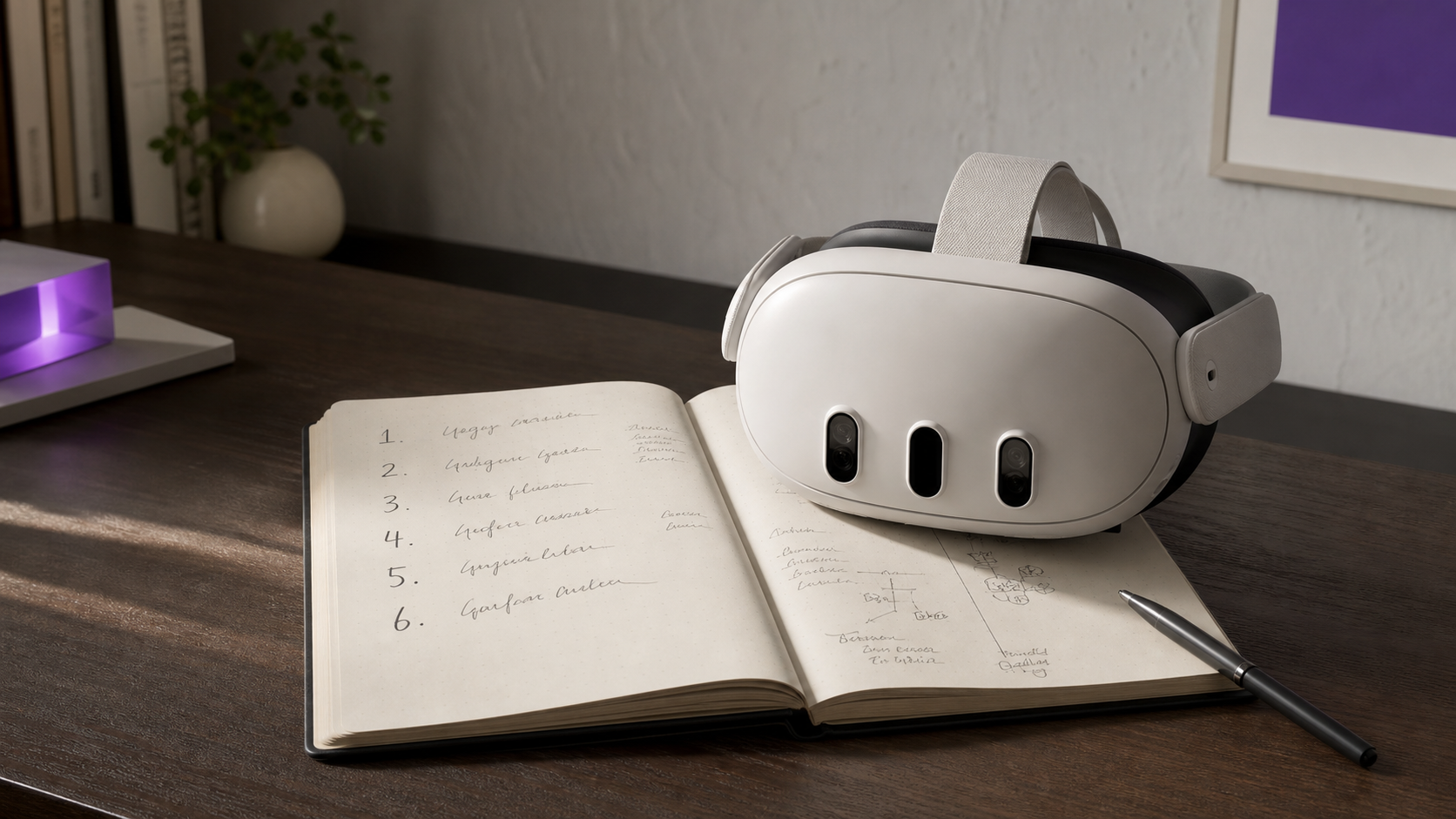
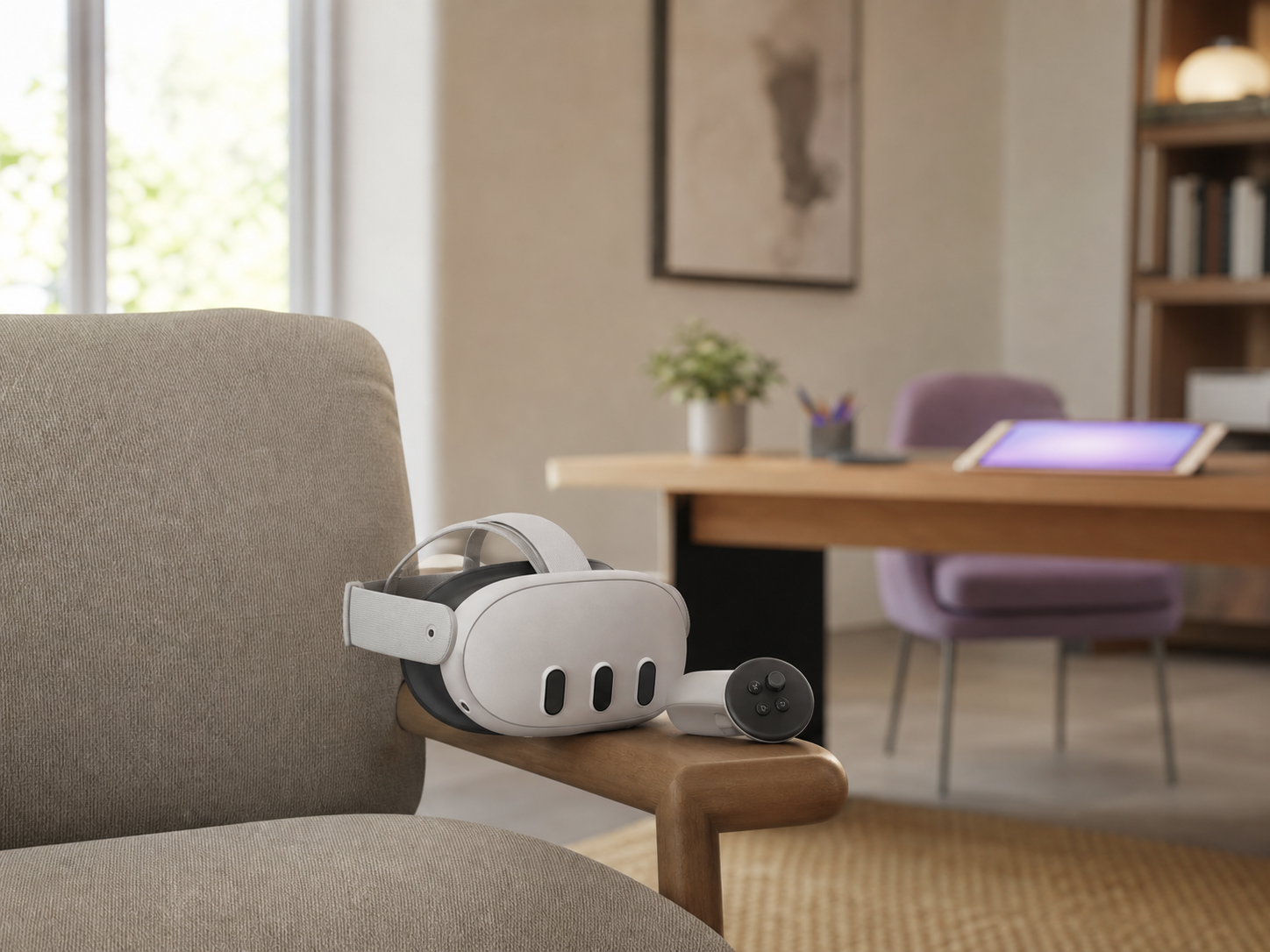
Acrophobia responds particularly well to VR exposure: the hierarchy is straightforward to build, intensity control is direct, and habituation tends to generalize to real-world contexts within 6-10 sessions. This is a protocol a licensed psychologist can run tomorrow with a Meta Quest 3 headset and a Glass Elevator-type scenario. It follows the classic hierarchical exposure framework with three adjustments specific to the virtual medium.
Why acrophobia is the first scenario you try with VR
If you have never run a VR exposure session before, starting with acrophobia is a clinically defensible choice. Three reasons converge:
- The stimulus is objectively difficult to reproduce in vivo: you cannot have a patient go up and down a balcony 18 times in one session without losing them to logistics.
- The height hierarchy is linear and reproducible: 1 m, 5 m, 15 m, 30 m, 80 m, urban panorama. Few variables for the psychologist to improvise.
- The empirical evidence is solid, dating back to the first RCT by Rothbaum and colleagues in 1995, which established feasibility and efficacy in a clinical sample.
If your target phobia is claustrophobia, fear of flying, or social anxiety, we have dedicated protocols on fear of flying and social anxiety, part of our full VR scenario catalog. This article focuses on heights.
This article is the operational piece: level matrix, numeric criteria and session mechanics. If what you need is the clinical presentation, the available evidence and the differential against vertigo, that is in acrophobia treatment: overcoming fear of heights with VR.
Before the first session: screening and contraindications
Four filters the psychologist applies to the patient before planning the first VR session:
- Vestibular history. Benign positional vertigo, Ménière's disease, or a history of vestibular migraine are a relative contraindication. Not absolute, but they require shorter sessions and specific monitoring of motion sickness.
- Photosensitive epilepsy or a history of seizures. An absolute contraindication for immersive headset use in a general private practice setting; refer to a neurology team.
- Pregnancy in the first and third trimester. A relative contraindication due to increased cybersickness associated with physiological changes. Postpone if possible.
- Recent medication with vestibular effects (sedating antihistamines, anxiolytics). Adjust the timing of the medication relative to the session, or document it to modulate intensity.
For a longer review of contraindications, we have a dedicated article. And to avoid iatrogenic cybersickness, check the motion-sickness prevention protocol before the first session.
The 6-level height hierarchy: the operational matrix
Build the hierarchy with the patient in a prior session (not during the VR appointment). Assign anticipated SUDS per level and check that progression is linear. The matrix that has worked in practice over the past 24 months is as follows:
Level 1 — Second-floor balcony (≈5 m)
Typical anticipated SUDS: 30-45. Low-immersion headset setting, view from an interior balcony with a solid railing. No movement. Duration: 8-12 minutes. Goal: initial habituation, validation of VR tolerance.
Level 2 — Urban lookout point (≈15 m)
Anticipated SUDS: 50-65. View from an elevated platform with a translucent railing. Minimal background movement (people passing below). Duration: 12-15 minutes. Goal: confront depth perception without self-movement.
Level 3 — Suspended walkway (≈30 m)
Anticipated SUDS: 65-75. Outdoor walkway with a direct view into open space, low railing. The patient can choose to move forward or stay still (control on the psychologist's panel). Duration: 12-15 minutes. Goal: integrate the avoidance response within the hierarchy.
Level 4 — Tall building rooftop terrace (≈80 m)
Anticipated SUDS: 75-85. Upper terrace with a panoramic urban view, with the option of approaching the edge. Movement controlled from the psychologist's panel. Duration: 15 minutes. Goal: tolerance to extreme height with an element of choice.
Level 5 — Panoramic glass elevator (≈100 m)
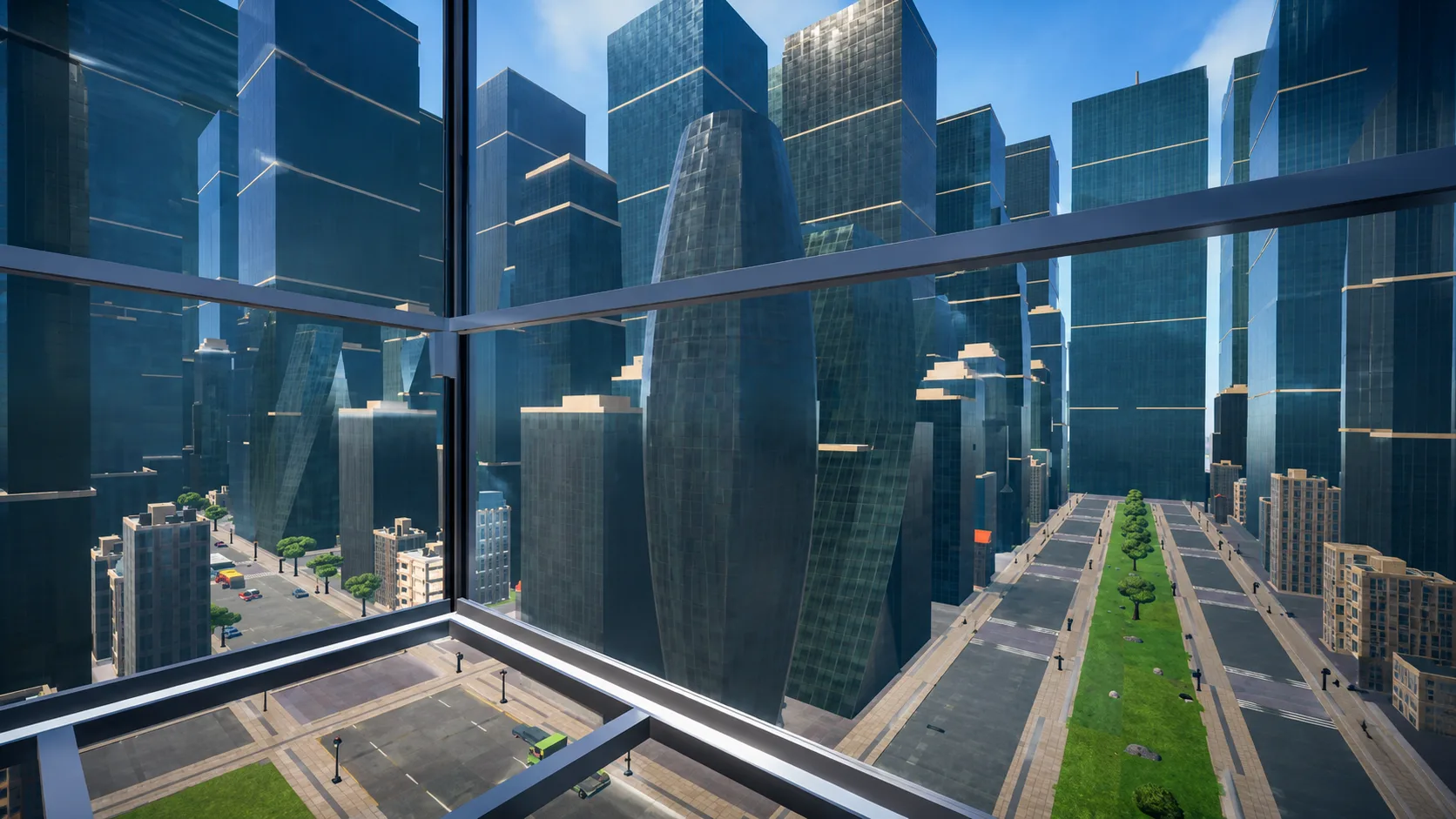
Anticipated SUDS: 80-90. The VRET Glass Elevator scenario covers this level: an elevator with glass walls, a procedural city, and live transparency and wind-sway controls. Duration: 12 minutes. Goal: consolidate habituation with a movement element.
Level 6 — Combined stimulus (movement + extreme height)
Anticipated SUDS: 85-95. Combination of panoramic height with sustained movement (slow rotation, swaying elevator). Duration: 10-12 minutes. Goal: the maximum habituation achievable in VR before the transition to in-vivo exposure.
If the patient reaches a sustained SUDS ≤4 at level 6, the VR hierarchy has served its purpose. The transition to in-vivo exposure (a real lookout point in the city, an accessible terrace) is the next scheduled step in the treatment plan.
SUDS criteria: when to advance a level and when to repeat
An operational rule that reduces guesswork for a psychologist new to VR:
- Advance a level: final SUDS ≤4 sustained for 5 consecutive minutes. Confirm with two consecutive sessions if the patient has significant underlying anxiety.
- Hold the level and repeat: final SUDS between 5 and 6. Repeat the same level in the next session; wait for a habituation plateau.
- Step down a level: final SUDS ≥7 in two consecutive sessions, or an intra-session crisis that forces you to stop. Drop one level and consolidate.
Document the session-by-session SUDS curve in the clinical record. For the GDPR-compliant documentation piece, we have a dedicated protocol.
Subjective distress anchors, floor by floor
The level matrix says what gets presented; what is missing is where you measure. The classic virtual height-exposure paradigm settles this with a glass cabin ascending a building and a subjective distress rating taken at specific floors, rather than continuously.
The reference floors are 1, 2, 3, 4, 9 and 19. The distribution is not arbitrary and the logic is worth understanding: the first four sit close together because that is where the patient with mild avoidance separates from the one with an established phobia. Someone without the phobia barely moves between floors 1 and 4; someone with clinical acrophobia is already rating high on 3. The jump to 9 and then 19 opens the upper range without multiplying the number of readings.
The rating at the highest floor works as the primary outcome measure, comparable across sessions and across patients. It is a figure you can put in the clinical note without further processing.
Four practical rules for the measure to be worth anything:
- Take the rating inside the environment, not on the way out. Asked afterwards, the number is contaminated by the relief of having finished.
- Record onset, peak and close for each trial. The peak alone hides the curve, which is what tells you whether habituation occurred.
- Always use the same floors. Changing the measurement points between sessions destroys comparability, which is the only reason to measure at all.
- Do not announce the floor before asking. The floor number acts as a suggestion and biases the rating upward.
With height, floor transparency and perceived edge protection as independent controls, you can move a single variable per trial and find out which one actually sustains the response. In a fair number of patients it is not the height: it is the absence of a railing.
The three adjustments unique to the virtual medium
The difference between running this protocol in VR and running it through imaginal exposure or an improvised in-vivo hierarchy comes down to three adjustments the psychologist controls live from the panel:
- Intensity adjustable second by second. If SUDS rises too fast, you can reduce transparency, remove background movement, or lower perceived height without stopping the session. None of that exists in vivo.
- Exact repetition of the stimulus. Once you validate level 3 with a patient, the next session is exactly the same. Habituation is built on repetition; the controlled stimulus makes that possible.
- Control over exit. The patient can request immediate closure without the social friction of climbing down from a physical lookout point. The psychologist decides whether to accommodate it or modulate first. This sense of control is part of the therapy.
Bridge sessions: transitioning to in-vivo exposure without wasting the gains
The VR protocol does not end in the office. The transition to the real-world stimulus is what prevents headset dependence and consolidates generalization. Three recommendations:
- Session 7 or 8 — schedule light in-vivo exposure. An accessible lookout point in the city, a café terrace with a view, a real panoramic elevator (shopping malls usually have one). Accompany the patient the first time; do not send them alone.
- Address the habituation rationale explicitly. A patient who has reached SUDS ≤4 in VR needs to hear you say, "what you achieved in the office transfers to reality." The cognitive element is not delegated to the headset.
- Schedule a follow-up session at 3 months. This is not optional. Acrophobia has relapse rates that a short booster session helps mitigate.
Take-home material for the patient
Give the patient, before the first session, a one-page handout covering:
- What cybersickness is and how you manage it in the office.
- The agreed signal to stop (hands up or an agreed verbal cue).
- How many sessions are estimated based on the screening.
- What the panoramic elevator they will see at advanced levels looks like (without spoiling the anticipated SUDS).
- What is needed between sessions (there is no homework except during the in-vivo transition).
To have all the operational material ready in the office on day one (specific informed consent, briefing, debriefing, pre-session checklist), the VR practice checklist is the downloadable resource covering the 27 points of any VR session, not just acrophobia.
This article is for informational purposes for psychology professionals. It is not clinical advice for any individual case and does not replace the judgment of the licensed psychologist in charge. VRET is professional clinical-support software, not a CE-marked medical device.
Frequently asked questions
How many sessions are typically needed for VR treatment of acrophobia?
Between 6 and 10, depending on initial clinical severity and comorbidity. Patients with an average anticipated SUDS around 60-70 tend to consolidate habituation in 6-8 sessions. Patients with broad comorbid anxiety or associated traumatic experiences (falls, accidents) require the higher end of the range.
Does VR treatment for acrophobia generalize to real heights?
Yes, in most patients who complete the hierarchy and consolidate the in-vivo transition. Neural habituation to the height cue does not distinguish between medium (headset or real) if the autonomic response is comparable. The explicit in-vivo transition (session 7-8) is what confirms generalization; without it, there is a risk of headset dependence.
Is cybersickness a serious problem in VR treatment for acrophobia?
It is the most common side effect, but it is usually manageable with good practice: short initial sessions (8-10 min), prior acclimatization, correct headset fit (accurate interpupillary distance), scheduled pauses, and not advancing a level if residual discomfort remains. Iatrogenic cybersickness is the psychologist's responsibility, not the patient's.
Can I use this protocol if I have never done VR exposure before?
Yes, if you have prior experience with classic hierarchical exposure. The VR acrophobia protocol has the gentlest learning curve in the phobia catalog. We recommend validating the first two levels with a pilot patient who has mild acrophobia before applying it to severe cases.
What is the difference from the classic non-VR protocol?
Identical structure (hierarchy + SUDS + repetition + in-vivo transfer); faster execution (each level is reached in one or two sessions versus several in imaginal or in-vivo exposure) and greater control over variables (intensity, distance, movement). The habituation curve accelerates because the stimulus is reproducible and adjustable.
At which heights should subjective distress be rated?
The standard paradigm measures at floors 1, 2, 3, 4, 9 and 19 of a glass lift. The first four sit close together because that is where mild avoidance separates from an established phobia; the jump to 9 and 19 opens the upper range without multiplying readings. The rating at the highest floor works as the primary outcome measure across sessions. Take it inside the environment, record onset, peak and close, and do not announce the floor number before asking.
Keep reading
Driving Phobia After a Crash: Specific Phobia or PTSD?
Driving phobia of traumatic origin: criteria that separate it from PTSD, what to treat first in mixed presentations, and how to build the driving hierarchy.
Specific phobiasClaustrophobia Exposure Hierarchy: Nine Graded Levels
A nine-level claustrophobia exposure hierarchy built on two independent axes, the differential against agoraphobia, and a brief protocol for MRI referrals.
Specific phobiasAcrophobia vs Vertigo: A Clinical Differential Guide
Acrophobia, vestibular vertigo and visual height intolerance get confused in practice. Five intake questions, two questionnaires and clear referral criteria.
VRET is professional clinical-support software, not a CE-marked medical device. Clinical supervision remains with the licensed psychologist in charge.