Acrophobia vs Vertigo: A Clinical Differential Guide
By Equipo VRET
Two patients describe the same thing, "I get dizzy up high", and need opposite treatments. One has a specific phobia; the other has a vestibular disorder that an exposure hierarchy will make worse. This article separates acrophobia, vestibular vertigo and visual height intolerance using five intake questions, the two validated questionnaires that exist, and explicit criteria for referral to ENT.

Two patients saying exactly the same thing
"I get dizzy when I look down." It is one of the most ambiguous sentences that walks into a consulting room, and it covers at least three presentations that are treated differently and that, badly separated, undermine one another.
Patient A has avoided heights since adolescence, knows the fear is out of proportion, anticipates the situation days in advance, and has no symptoms at all when height is not involved. Patient B started eight months ago, abruptly, also gets episodes when rolling over in bed, and describes the floor as moving. Both of them say they are frightened of stepping onto a balcony.
Running an exposure hierarchy with patient B will not merely fail to help: it can consolidate avoidance on top of an unidentified organic problem and delay a vestibular assessment by months. It is the kind of error that never reaches supervision, because the patient simply drops out.
The differential is not binary either. Comorbidity between vestibular dysfunction and situational anxiety is high, and a proportion of patients arrive with both: an originating vestibular episode that has since resolved, and learned avoidance that now maintains itself.
Three presentations worth keeping apart
Acrophobia. A specific phobia of the situational subtype. The fear is anticipatory, disproportionate and recognised as such by the patient. It activates in response to height and only to height. The response is anxiety: tachycardia, muscular tension, an urge to move away from the edge, cognitions about falling or about losing control and jumping.
Vestibular vertigo. An illusory sensation of movement, of the self or the surroundings, peripheral or central in origin. It does not need height to appear: benign paroxysmal positional vertigo is triggered by changes in head position, typically on lying down or turning over in bed. It is usually accompanied by nystagmus, nausea and, depending on aetiology, auditory symptoms.
Visual height intolerance. The least familiar of the three and the one most often mistaken for acrophobia. It is a postural instability and discomfort response that appears when the visual system loses nearby depth references, which happens naturally when looking out from a viewing platform or a bridge. It is common in the general population, far more prevalent than the phobia, and mild in most cases. Only a minority develop clinically significant avoidance.
The useful distinction between the latter two and the first is the timing of the symptom. In acrophobia there is anxiety before arrival; the patient is already struggling in the lift on the way up. In vestibular presentations and in visual height intolerance the symptom appears in the situation, once the physical stimulus is present, and not before.
Five questions that organise the first session
No instrumental testing is needed to orient the case. Five well-placed questions separate most presentations within twenty minutes.
- Does it ever happen without any height involved? If there are episodes on turning over in bed, bending down or standing up quickly, the vestibular axis rises in probability immediately.
- Which starts first, the fear or the dizziness? Anticipatory anxiety preceding exposure points to phobia. A symptom that only appears once already up there points to the other two.
- What exactly do you fear will happen? "Falling", "being pushed" or "getting the urge to jump" are phobic cognitions. "Falling because my balance gives way" points to genuinely perceived instability.
- Since when, and with what onset? An abrupt adult onset, especially one the patient can date, is a flag for medical assessment. Specific phobias typically have early onset and a fluctuating chronic course.
- Are there auditory symptoms? Hearing loss, tinnitus or a blocked-ear sensation do not belong to the phobic presentation and mandate referral.
It is worth recording the answers verbatim. How the patient formulates what they fear is by some distance the most discriminating datum, and it is lost if you summarise it.
What the acrophobia questionnaires measure, and what they do not
Two classic instruments exist and it pays to know precisely what each contributes.
The Acrophobia Questionnaire is built on a list of height situations and scores two dimensions separately: anxiety experienced and avoidance. That separation is its real value: it picks up the patient who no longer scores high on anxiety because they have not been near a height in years, a profile a unidimensional instrument would read as mild.
The Attitude Towards Heights Questionnaire captures beliefs about heights and works as a measure of cognitive change across treatment, rather than as an initial screen.
What neither of them does is rule out vestibular pathology. A patient with positional vertigo can score high on height avoidance perfectly coherently, because they do in fact avoid heights. The score confirms the size of the functional problem; it says nothing about where it comes from. That work is done by the interview and, where indicated, by the ENT specialist. Measuring VRET effectiveness with clinical outcome instruments covers how to fit them into follow-up.
When to refer before starting treatment
Some signs warrant medical assessment before starting any exposure hierarchy. They are not criteria for excluding psychological treatment: they are criteria about sequence.
- Vertigo episodes outside height situations, particularly linked to changes in head position.
- Associated auditory symptoms: hearing loss, tinnitus, aural fullness.
- Recent abrupt onset in an adult with no prior history of fear of heights.
- Accompanying neurological symptoms: diplopia, dysarthria, gait disturbance, new-onset headache.
- History of head trauma or recent ear infection.
- Actual falls, not avoided out of fear but from genuine loss of balance.
Communicating the referral without the patient reading it as rejection has its own technique. It works well to make the reasoning explicit: the aim is not to treat blind, because if there is a vestibular component the exposure is designed differently and paced differently, and that is worth knowing before starting.
The reverse case exists too and is common: patients referred from ENT with the vestibular presentation already resolved and avoidance that now maintains itself. There, exposure is precisely the indicated treatment, and the patient usually arrives believing their problem "is physical" and beyond psychological help. Undoing that belief is part of the early work.
Why virtual reality exposure helps the differential
There is a rarely discussed advantage to working with height in a virtual environment, and it has nothing to do with treatment and everything to do with assessment: it lets you deliver the visual height stimulus without a real vestibular one.
On a physical viewing platform the patient climbs stairs, moves about and turns their head, receiving genuine vestibular input. In a virtual glass cabin with the patient seated and still, the visual channel receives the height while the vestibular system receives almost nothing. If an intense sensation of spinning or instability appears under those conditions, the datum is informative and deserves careful reading.
With one important caveat that should not be skipped: virtual reality itself can induce motion sickness through sensory conflict, and that discomfort is easily mistaken for the patient's own vestibular symptom. Telling them apart requires an acclimatisation session with a static, height-free scenario before the phobic stimulus is introduced. The guide to VR motion sickness, its causes and prevention details that pre-screen.
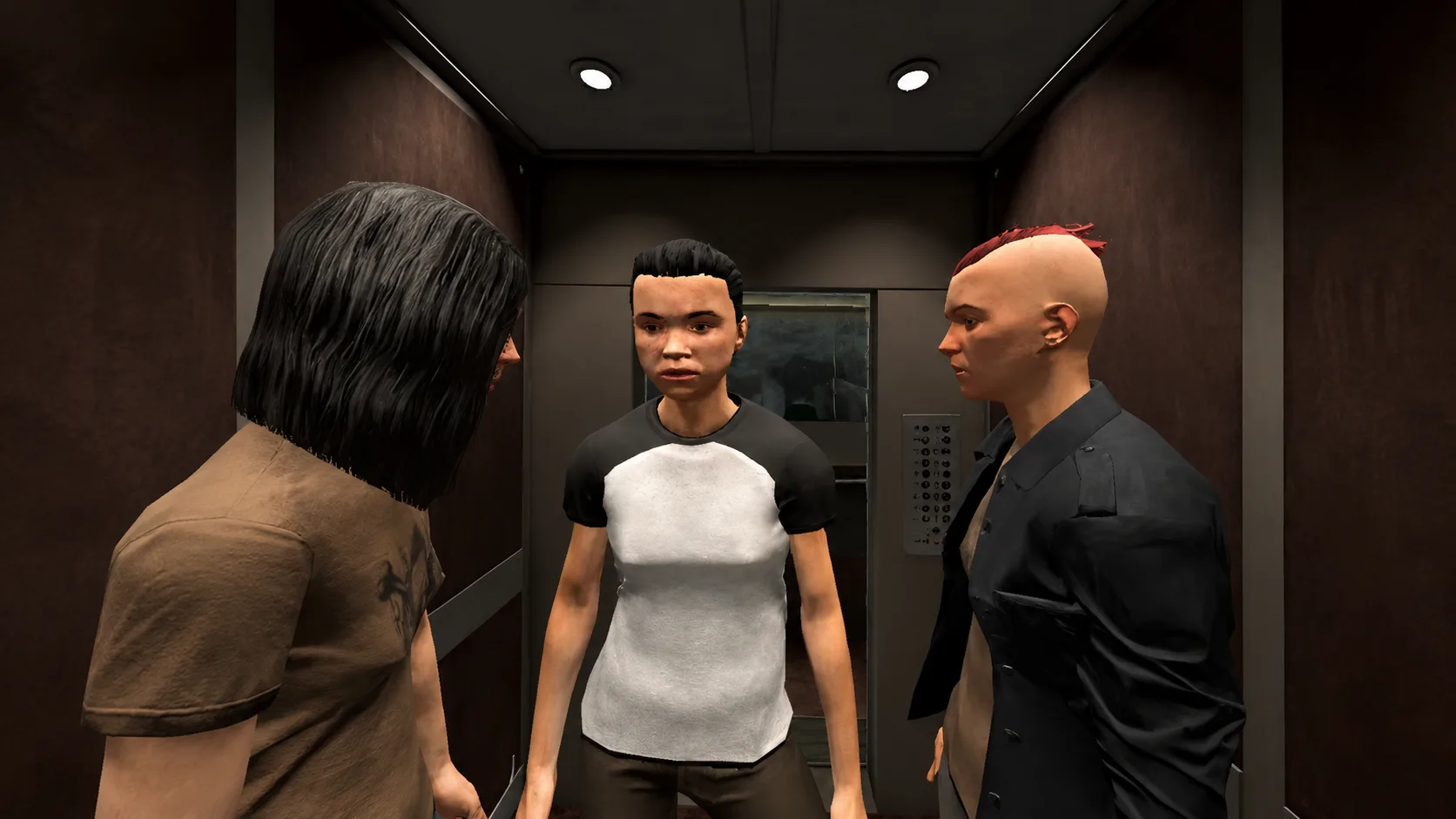
In the VRET acrophobia scenario, height, floor transparency and perceived edge protection are controlled separately from the clinician panel, which lets you move a single variable per trial during the assessment phase.
From the differential to the treatment plan
Once the differential is settled, the plan forks cleanly. In pure acrophobia, a graded exposure hierarchy; the VR acrophobia protocol with its six-level height exposure hierarchy sets out the levels and the subjective distress anchors.
In a mixed presentation, with an identified and treated vestibular component, exposure still applies but with two adjustments: shorter trials at the outset, and separate recording of two variables, anxiety and perceived instability. Keeping them apart avoids attributing a symptom to anxiety that does not belong to it, and the other way round. An overview of the presentation sits in acrophobia treatment: overcoming fear of heights with VR.
And in visual height intolerance without phobia, the intervention is usually brief: psychoeducation about the phenomenon, normalisation, and a small number of exposure trials aimed at recovering the avoided behaviour rather than at eliminating a sensation that is physiologically expected.
For the per-session record, the VR practice setup checklist lists the essential minimum.
This article is for informational purposes for psychology professionals. It is not clinical advice for any individual case and does not replace the judgment of the licensed psychologist in charge. VRET is professional clinical-support software, not a CE-marked medical device.
Frequently asked questions
What is the difference between acrophobia and vertigo?
Acrophobia is a specific phobia: anticipatory, disproportionate fear of heights that activates only in response to that stimulus. Vertigo is an illusory sensation of movement, vestibular in origin, that does not need height to appear and is usually triggered by changes in head position. The most practical discriminator in session is timing: in acrophobia the distress starts before arrival; in vertigo it appears with the physical stimulus present.
Are vertigo and fear of heights the same thing?
No, although everyday language uses them interchangeably and many patients arrive saying they have "vertigo" while describing a phobia. They are different in nature, have different treatments and different referral pathways. Treating them as synonyms leads to applying exposure to unidentified vestibular problems.
What is visual height intolerance?
An instability and discomfort response that appears when the visual system loses nearby depth references, for instance when looking out from a viewing platform or a bridge. It is far more common in the general population than acrophobia and is usually mild. Only a minority develop clinically significant avoidance, and in those cases the intervention tends to be briefer than for an established phobia.
Can a patient have both acrophobia and a vestibular disorder?
Yes, and it is a frequent profile. A vestibular episode can inaugurate avoidance that then maintains itself even after the organic presentation resolves. In those cases exposure is indicated, with two adjustments: shorter initial trials, and separate recording of anxiety and perceived instability so that neither is misattributed to the other.
When should I refer to ENT before treating?
When there are vertigo episodes outside height situations, associated auditory symptoms, recent abrupt onset in an adult with no prior history, accompanying neurological symptoms, a history of head trauma or recent ear infection, or falls from genuine loss of balance. These are not criteria for excluding psychological treatment but criteria about sequence: it is worth knowing before designing the hierarchy.
Keep reading
Acrophobia Treatment: Overcoming Fear of Heights with VR
A VRET protocol for acrophobia: from Rothbaum's 1995 trial to a graded hierarchy of balconies, stairs, bridges and glass elevators, step by step.
Specific phobiasDriving Phobia After a Crash: Specific Phobia or PTSD?
Driving phobia of traumatic origin: criteria that separate it from PTSD, what to treat first in mixed presentations, and how to build the driving hierarchy.
Specific phobiasClaustrophobia Exposure Hierarchy: Nine Graded Levels
A nine-level claustrophobia exposure hierarchy built on two independent axes, the differential against agoraphobia, and a brief protocol for MRI referrals.
VRET is professional clinical-support software, not a CE-marked medical device. Clinical supervision remains with the licensed psychologist in charge.