What is in vivo exposure? Definition and clinical use
By Equipo VRET
In vivo exposure is the modality in which the patient confronts the real feared stimulus in its own natural setting, accompanied by the clinician and following a plan agreed in advance. It remains the reference route whenever the stimulus is available and travelling to it is workable. Its limits are not theoretical but logistical: scheduling, cost of travel, unplanned environmental events and confidentiality in public space. What follows sets out what in vivo exposure is, when it is indicated and what it combines with.

What is in vivo exposure?
In vivo exposure is the procedure by which the patient makes contact with the real stimulus they fear, in the place where that stimulus actually occurs, inside a plan agreed with their clinician. Nothing mediates the encounter: no screen and no narrative, just a loose dog, a service elevator, a square full of people. The literature also calls it real world exposure or exposure in natural settings.
Three features define in vivo exposure. The real stimulus, material and present, with its noise and its smell. The natural setting, which is the context where the patient lives the problem rather than a reproduction of it. And the clinician's accompaniment, either present during the outing or substituted by a written between-session assignment that is reviewed afterwards. Without the third feature there is no therapeutic in vivo exposure.
DSM-5-TR describes specific phobia in terms of active avoidance and of fear out of proportion to the objective danger. In vivo exposure works on that avoidance at the exact spot where it is produced. That is where its greatest value lies, and also where almost all of its practical problems begin, which are problems of calendar and of budget long before they are problems of theory.
One example maps out the terrain. In agoraphobia the feared object is a crowded square, a train carriage or a long line at a checkout: the field outing is the classic procedure, and the agoraphobia scenario sheet shows how that situation is broken down into workable steps. In dog phobia a single animal of known size with a cooperative owner is enough. The remaining modalities in the range are described elsewhere.
What does the patient learn in front of the real stimulus?
For decades the answer was habituation: if the patient stays alongside the real stimulus long enough, arousal comes down on its own. Foa and Kozak gave that idea its theoretical footing when they described the need to activate the fear structure and to feed in information that corrects it. The phenomenon is visible on every field outing and nobody disputes it.
The framework in force is a different one. Craske and colleagues put forward inhibitory learning and later reframed it as inhibitory retrieval. Extinction does not erase the original fear association: it adds a second association that competes with it. The patient does not unlearn that a dog can bite. They learn, in addition, that this dog and this encounter did not bring the harm they had predicted.
The shift has operational consequences. What makes a session of in vivo exposure do its work is expectancy violation: the gap between what the patient predicted and what actually happened. It is neither how long they endure nor whether their subjective units of distress drop before they withdraw. Within-session decline is a poor predictor of medium-term outcome, and leaning on it is one of the most frequent mistakes among clinicians starting out.
On this point the natural setting works in favor of in vivo exposure. The real stimulus arrives with a variability that nobody designed: the dog that barks off script, the elevator that stops a floor early, the stranger who sits down alongside. That irregularity helps the new association be retrieved later in different contexts. The trade-off is the loss of stimulus control.
When is in vivo exposure the modality of choice?
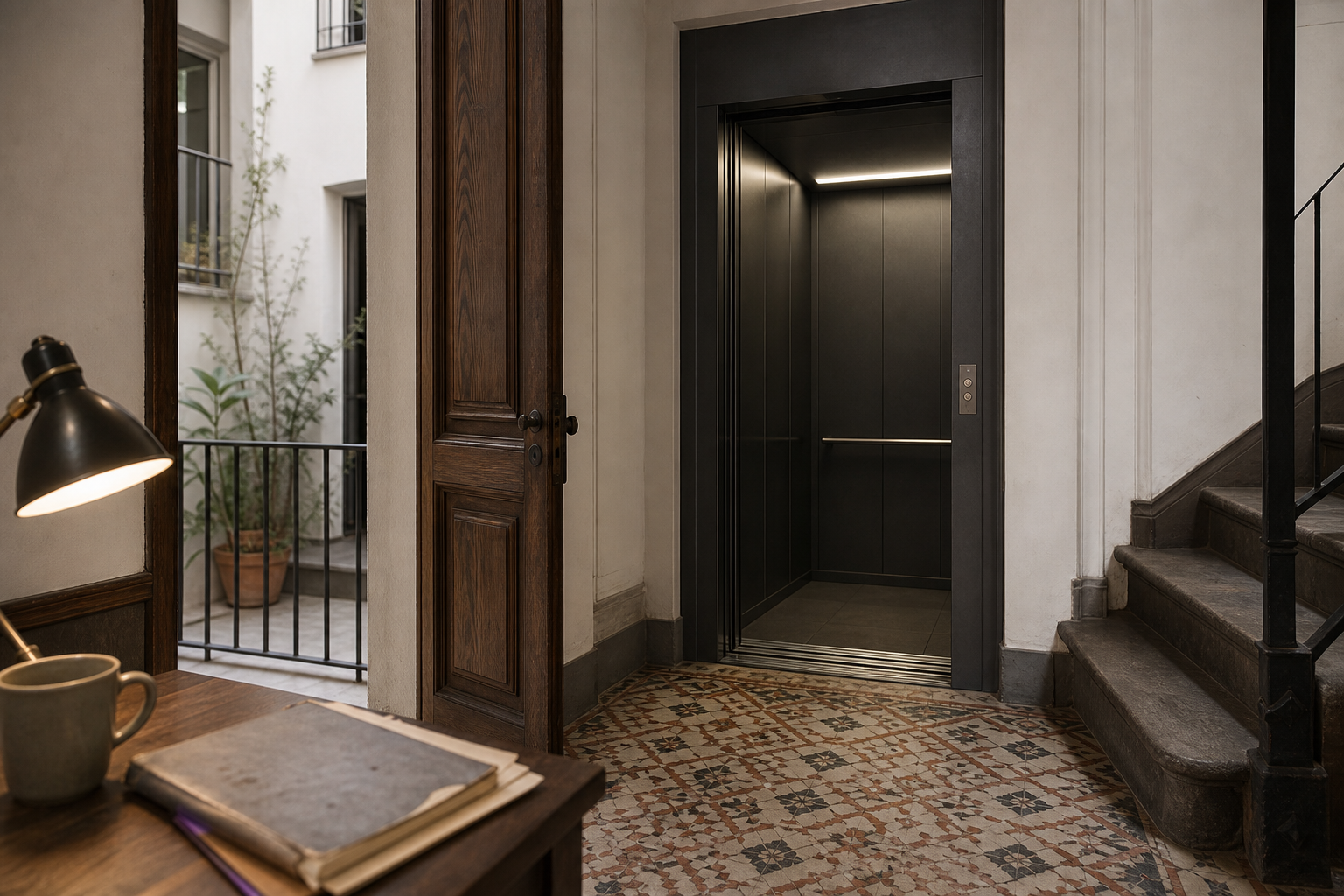
The first criterion is stimulus availability. When the feared object is plentiful, identifiable and open to some degree of control, such as a dog with an owner, the elevator of a familiar building or a city bus in off-peak hours, in vivo exposure is the shortest road. Nothing has to be transferred afterwards, because the learning happened where it belongs.
The second criterion is the patient's acceptance, which is explored before any date or location is fixed. In vivo exposure requires genuinely going in. The single-session treatment described by Öst rests on precisely two ingredients that exist only in the natural setting: the real stimulus and the therapist modelling in front of the patient.
The third criterion is generalization to everyday settings. When the stated goal is to take the subway again, to walk around the neighborhood or to sit down in a dentist's chair, the ecological test closes treatment with a value of its own. Many plans reserve the final field outings for exactly that, and not for adding repetitions.
There is a fourth criterion, a negative one: that the real stimulus cannot be obtained on the terms the work requires. Spider phobia illustrates it. Keeping a spider of predictable size and behavior in the consulting room is cumbersome, and the controlled study by García-Palacios and colleagues (2002, in Behaviour Research and Therapy) was among the first to show that the immersive route was workable in that presentation. The modality of choice depends on the presentation and on the environment, not on the clinician's school.

What does a field outing really cost?
The first line item is time. A session of in vivo exposure rarely fits inside the standard hour: you have to add the journey out, the wait until the stimulus appears, the exposure itself, the journey back and the closing review. Blocking out two or three hours for thirty effective minutes is the norm, and that arithmetic settles more indications than any theoretical argument.
The second is the cost of travel. Somebody pays for the taxi, the ticket, the parking or the entrance fee, and that is settled in writing before the first outing, not on the sidewalk. The detail is not a small one: when the cost falls entirely on the patient, adherence to the plan suffers at the stage where it matters most [CITATION TO VERIFY].
The third is the diary. In vivo exposure demands long slots and hours that do not line up with clinic hours, because the stimulus keeps its own calendar: the airport operates at certain times, the park fills up in mid-afternoon, the veterinary clinic works by appointment. A checklist for the practice keeps you from discovering those gaps on the morning of the outing.
The fourth is geography. Stimulus availability changes with the city: every town has a busy square, but a panoramic elevator, a workable stretch of highway or a cooperative dog training center does not come as standard. A practice in the center of a capital city plans in vivo exposure from a catalog of locations quite unlike the one available to an independent psychologist working out of a town of twenty thousand people.
What happens when the real stimulus is not available?
Four situations leave in vivo exposure without raw material. The stimulus does not exist within reasonable distance. It exists, but it cannot be controlled. It can be controlled, but it carries physical risk. Or it is unrepeatable by nature, like the turbulence of a flight or a thunderstorm. None of the four is solved by willpower: they are solved by changing route or by redesigning the plan.
Stimulus control is the underlying problem. In the natural setting the clinician governs neither the intensity, nor the duration, nor the timing. The dog that was supposed to bark lies down to sleep, the carriage that was supposed to be packed runs empty, the neighbor who appears changes the whole scene. Every unplanned environmental event can hand over a magnificent expectancy violation or empty the session out, and the clinician does not get to choose which.
Inside the modality itself there is room to maneuver before giving up. Agreements with third parties widen the catalog available to in vivo exposure: a dog training center, a residents' association that lends its elevator, a gym with a small studio. The hour of the day is another lever, because the same square at eight in the morning and at seven in the evening are two different stimuli.
When neither agreements nor scheduling resolve stimulus availability, the clinician has other routes for producing the same expectancy violation, and setting them side by side against the natural setting is the subject of another article. The criterion is this one: in vivo exposure is indicated when the environment sustains it and substituted when it does not, without drama and without loyalty to a school.
How is confidentiality protected outside the consulting room?
Leaving the office changes the frame. In the consulting room the frame is held by a closed door; out in the street there are third parties, cameras, neighbors and acquaintances. Consent for work in public space is not a formality bolted onto in vivo exposure: it is the piece that holds the whole thing up from an ethical standpoint.
A specific consent form covers at least four points: what will be done and where; who accompanies the patient and in what visible role; what is said if a third party asks; and what happens if somebody from the patient's own circle turns up. Agreeing that answer beforehand avoids improvising in front of the stimulus, which is when the slips happen.
Record-keeping deserves the same care as it does in the office. Start and finish times, location, the expectancy stated before going in, what actually happened, incidents and the agreements for the next outing. The rules for documenting the session in the clinical record do not change because the session took place on a train platform.
One matter gets forgotten often enough to be worth naming: whether the professional indemnity policy covers activity carried out away from the declared place of work. Before the first field outing it is worth going through the small print with the insurer and leaving a record that you did [CITATION TO VERIFY].
How does in vivo exposure fit into a wider treatment plan?
In vivo exposure is not a complete treatment: it is a component. NICE CG113 places it inside a cognitive behavioral approach, not as a free-standing piece that works on its own account. The usual sequence chains preparation in the consulting room, rehearsal, the field outing and a review afterwards.
On the immersive route, the meta-analysis by Powers and Emmelkamp concluded that its performance sits level with exposure in natural settings, and Carl and colleagues, reviewing later randomized trials, did not find it lagging behind. The correct reading is equivalence, not hierarchy.
What the clinician records across the plan also changes under the inhibitory framework. Before each outing, the specific expectancy and the probability the patient assigns to it; afterwards, what happened and the discrepancy between the two. That pair of data points steers the next decision with more precision than a distress curve does.
For anyone building this line of work, the practical decision is not doctrinal but a question of fit: which part of the plan the natural setting of their own city can sustain, and which part is better prepared in the consulting room first. You can book a demonstration to see how a hierarchy is configured inside the system.
This article is for informational purposes for psychology professionals. It is not clinical advice for any individual case and does not replace the judgment of the licensed psychologist in charge. VRET is professional clinical-support software, not a CE-marked medical device.
Frequently asked questions
Who accompanies the patient during a field outing?
The general rule is that the clinician responsible for the case goes along, above all on the first outings, because therapist modelling in front of the real stimulus is part of the procedure itself. In later phases the plan may include self-directed outings, with the task defined in writing, a record sheet the patient completes on the spot and a review in the following session. Delegating to a relative has to be weighed case by case: the companion is not a co-therapist, and their emotional involvement can push them to pull the patient out too early or, the other way round, to push too hard. What is never left to chance is the companion's visible role in public space, which is agreed before anyone leaves the consulting room.
What does the clinician do when an unplanned environmental event disrupts a session?
The first move is to work out whether the event adds or subtracts. A dog that barks when no dog was expected can be the most useful opportunity of the afternoon for testing whether the patient's prediction holds, and the protocol allows for making use of it with a direct question about what they expected and what happened. If the event overshoots the agreed level, the criterion is to reframe the task towards a goal that is reachable in that same location rather than ending abruptly: withdrawing at the peak of arousal consolidates avoidance. And if the stimulus simply fails to appear, the outing is closed all the same, with a record of what happened, because a session without a stimulus is still information about the choice of location.
How is travel time billed for a field outing?
There is no single answer, but there is a stable rule of thumb: charge for the total block of time occupied rather than for minutes of exposure, and put it in writing before the first outing. A field outing consumes two or three diary slots, and billing it as an ordinary session makes the modality unsustainable for the practice. It is also worth separating the cost of travel, meaning transport, parking and entrance fees, from the professional fee itself. Against that variable cost, support software runs on a fixed and predictable one: VRET plans start at $119 a month for Starter and $289 for Clinic, with a 30-day money-back window, which lets you budget a full quarter without surprises.
Is in vivo exposure mandatory before closing treatment for a specific phobia?
Mandatory it is not, but it is desirable whenever the environment allows it, and for one concrete reason: the test in the natural setting is what genuinely reports on generalization. A patient can complete an entire hierarchy in the consulting room and still avoid the real stimulus in their own neighborhood. When the field outing is not viable, the discharge plan should include some form of ecological check: a self-directed task with a record sheet, accompaniment by an informed relative, or structured follow-up on the situations the patient runs into on their own. What does not stand up is closing a case with no data at all about what happens outside the office.
What goes into the clinical record after a session in a natural setting?
The same fields as in the office, plus the ones specific to the outing. Exact location and time, because the same place at a different hour is a different stimulus. The expectancy the patient stated before going in, with the probability they assigned to it. What actually happened and the discrepancy with that expectancy. Incidents, including those involving third parties. Agreements for the next outing and who covers the cost of travel. And the reference to the signed consent for work in public space, with its date. That record serves three purposes at once: deciding the next step, sustaining continuity if the case changes hands, and answering a complaint if one arrives.
Keep reading
What types of exposure therapy are there? Five modalities
The five types of exposure therapy — in vivo, imaginal, interoceptive, virtual reality and prolonged exposure — and the criteria that decide between them.
Practice managementCan Online Exposure Therapy Work? The Clinical Limits
Whether online exposure therapy can be done at all, what professional support actually contributes, and which credentials authorise a clinician to deliver it.
Practice managementContraindications to Exposure Therapy: Risks and Cautions
Contraindications to exposure therapy, whether it can make anxiety worse and who it does not suit: exclusion criteria and clinical cautions.
VRET is professional clinical-support software, not a CE-marked medical device. Clinical supervision remains with the licensed psychologist in charge.