VR Mindfulness: Immersive Nature Environments for Calm
By Equipo clínico VRET
VR mindfulness combines two well-supported lines of research: attention training and exposure to restorative natural environments (beaches, forests, mountains). Studies suggest modest reductions in stress markers (cortisol, heart rate) and improved mood after brief sessions. It is not a stand-alone treatment: it works as a complement to psychotherapy and personal practice supervised by a licensed psychologist. This article explains what it does and does not offer.
Why Combine Mindfulness and Virtual Reality
Mindfulness, understood as the practice of non-judgmental attention to the present moment, has been integrated into evidence-based psychotherapy for more than four decades. Programs such as Kabat-Zinn's Mindfulness-Based Stress Reduction (MBSR) and Segal, Williams, and Teasdale's Mindfulness-Based Cognitive Therapy (MBCT) have shown efficacy in stress reduction, relapse prevention in depression, and management of chronic pain.
In parallel, research on exposure to natural environments (referred to in the literature as nature exposure or green exposure) has documented positive effects on salivary cortisol, heart rate, blood pressure, and subjective mood. Work by Browning, Yeo, and other authors suggests that even virtual nature (video imagery or VR environments) reproduces part of these restorative effects.
Virtual reality makes it possible to combine both elements: an immersive natural environment (a forest full of ambient sound, a beach at sunrise) where mindfulness can be practiced with fewer distractions than in the consulting room, without traveling to a real-world setting. For many patients living in cities, this lowers the barrier to entry for the practice.
What the Evidence Shows
Research specifically on mindfulness in virtual reality is still relatively young, but the findings converge in a reasonable direction. Available systematic reviews describe modest but consistent reductions in acute stress measures (cortisol, state-anxiety scales) following single sessions of virtual nature lasting 5 to 20 minutes.
For longer programs (several sessions over multiple weeks), the effects accumulate, especially when combined with guided mindfulness instructions and personal practice between sessions. According to recent meta-analyses, the magnitude of the effects is comparable to that of conventional mindfulness programs.
It is worth noting that many studies have small samples, short follow-up periods, and limited active comparators. This line of research is promising but does not yet allow definitive conclusions about the superiority of the VR version over traditional practice.
Which Environments Are Typically Used
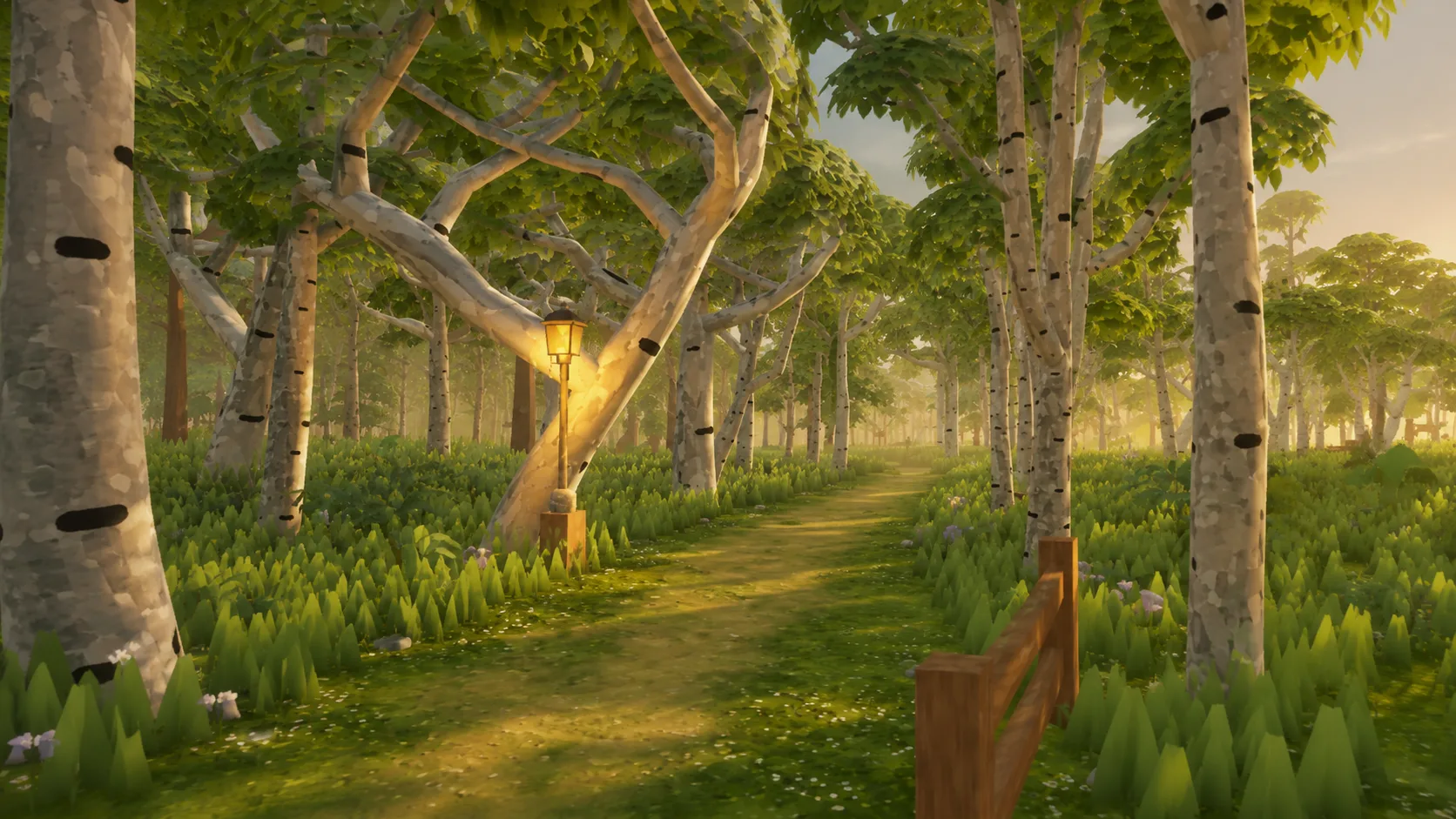
The VRET team and other similar platforms have refined a catalog of environments designed for mindfulness practice. The most common are: forests with ambient sound and changing light, beaches at sunrise or sunset with the sound of waves, mountain meadows with breeze and birdsong, calm lakes with morning mist, and gardens with flowers and butterflies.
The design criterion is to maximize the sense of restorative nature without cognitively demanding elements (no tasks, no goals, no scores). Spatial sound is important: birdsong, wind, and water are all positioned to reinforce the sense of presence.
Some environments include a soft guiding voice that leads the mindfulness practice step by step. Others are used in silence or with recordings made by the psychologist, depending on each professional's style.
What a guided nature walk scenario looks like from the inside
The label "immersive nature environment" hides the design decisions that determine whether a scenario is usable in session or stays a pretty demo. They are worth spelling out, because they are exactly what to ask any vendor before buying.
The patient does not drive the movement. In a guided walk the route advances on its own, at a constant pace along a fixed rail. That is deliberate: if the patient steers with controllers, attention goes to the motor task and the very thing you are training disappears. Passive, slow movement also reduces the sensory conflict that causes motion sickness.
The route has stops; it is not a video. The useful structure is a sequence of points of interest where movement halts and a short prompt enters: attend to the sound of the water, notice the contact of your feet, follow the movement of the leaves. Between stops there is silence, and that silence is part of the exercise rather than a gap to fill.
The narration can be switched off. A patient with prior practice usually prefers the environment without a voice; a beginner needs the guidance. If the voiceover cannot be decoupled from the scenario, you lose half your cases.
Duration governs content. Half an hour of route is not thirty minutes of stimuli: it is a sustained pace with very little variation. The temptation to add wildlife, changing weather and events runs directly against what an attention exercise requires.
In the VRET catalogue this corresponds to the mindful park walk scenario: around thirty minutes, rail-based route, prompted stops, decoupled voice narration and no phobic stimulus at all. It sits alongside the rest in the clinical scenario catalogue.
Use Within the Clinical Session
In the consulting room, VR mindfulness can serve several purposes: as preparation before an exposure session (to reduce baseline arousal and facilitate the work that follows); as an in-session regulation technique (if arousal during an exposure becomes too intense and a pause is warranted); and as explicit training of attentional skills (for patients with concentration difficulties or a tendency toward rumination).
The psychologist decides the duration (typically 5 to 15 minutes), the environment, and the degree of guidance. The session usually closes with a brief reflection on the experience and on how to apply what was learned outside the consulting room.
Three moments of use are worth separating, because they pursue different things and are not equally advisable.
Before exposure. The most valuable use and the least exploited. It places the patient inside their window of tolerance, doubles as headset acclimatisation with an environment carrying no emotional load, and lets you rule out motion sickness before it gets confused with phobic arousal. A patient who enters the hierarchy already regulated tolerates higher levels in the same session, and that arithmetic compounds across a full course of treatment. The breathing work for this phase is developed in cardiac coherence and VR: regulating patients before exposure.
During exposure. One important caveat here: inserting relaxation mid-trial can function as a safety behaviour and block disconfirmation of the expectancy. The exception is clinical de-escalation, where the therapist freezes the stimuli to bring down the arousal of a patient who has moved outside the working window. That is not a break; it is a manoeuvre with a beginning and an end decided by the clinician.
At closure. A few minutes of neutral environment help the patient leave the room in a different state from the exposure peak. It is a minor use, but it improves how the session is remembered and adherence to the next one. A presentation where this sequence matters particularly is covered in the clinical claustrophobia scenario.
Use Outside the Session
Some practices using VRET set up a protocol in which the patient can practice VR mindfulness outside of formal in-person sessions, either by visiting the practice between scheduled sessions or, in some pilot cases, with headsets provided temporarily for supervised at-home use.
This second modality is interesting but requires precautions: psychologist supervision of the instructions, clear usage protocols, and avoidance of compulsive use or use as a substitute for other practices. Virtual reality should not become an avoidance behavior or a routine isolated from the therapeutic framework.
For patients who already have an established mindfulness practice, VR can be an occasional complement for especially difficult sessions or to reinforce motivation. For those just starting out, it is best combined with traditional, technology-free practices.
What VR Mindfulness Is Not
It is important to calibrate expectations. VR mindfulness is not a stand-alone treatment for clinical conditions. It does not replace psychotherapy for depression, clinical anxiety, personality disorders, or trauma. It is a complementary technique that can be part of a broader treatment plan.
Nor is it a quick fix for work or life stress. Mindfulness practice, whether with or without VR, requires consistency. Isolated sessions can generate momentary well-being, but lasting effects come from sustained repetition.
And, obviously, it is not a virtual escape from real life. The goal of the practice is to develop attentional and regulation skills that apply to daily life, not to create a dependency on the virtual environment as a refuge.
Differences Between VR Practice and Traditional Meditation
Traditional mindfulness practice is usually done with eyes closed or gaze lowered, in a tidy, quiet physical space, without additional visual stimuli. VR practice keeps the eyes open within a virtual environment rich in natural sensory stimuli.
This has both advantages and drawbacks. The advantage is that it lowers barriers to access for many people: the virtual environment offers a concrete sensory anchor for attention to rest on, which helps those who find it difficult to meditate with closed eyes or in everyday spaces. The drawback is that it adds a sensory layer that traditional practice does not include, and some professionals argue that this can distract from introspection.
Both modalities can coexist. A balanced clinical practice will use VR as an occasional complement, without expecting it to replace traditional meditation. The ultimate goal is the same: to develop the capacity to attend to the present with openness and acceptance.
Clinical Cases Where It Is Used Most
VR mindfulness finds applications in several specific clinical situations: as support for managing work or academic stress in patients presenting with adjustment disorders; as a regulation tool prior to intense exposure sessions, particularly in PTSD or severe social anxiety; and as a component of chronic pain protocols, where mindfulness has shown proven usefulness.
It is also used with hospitalized patients or those with reduced mobility who cannot access real natural environments and who benefit from the restorative component of immersive nature. In oncology, for example, there are research lines exploring its use as support during long medical procedures.
For the general non-clinical population, VR mindfulness can be an entry point into the practice, without being intended to replace structured programs such as MBSR or MBCT when these are indicated.
Precautions and Contraindications
The safety profile of VR mindfulness is good, but certain considerations apply. Motion sickness can occur in susceptible individuals, especially with environments that include movement. Some people with a history of severe trauma may experience unexpected reactions when immersed in intense sensory stimuli (even in peaceful environments); this is addressed through prior preparation and gradual exposure to the headset.
Mindfulness itself, in a small proportion of practitioners, can trigger difficult experiences (negative affect, intrusive memories). In a clinical context, this is identified and managed. Outside a therapeutic framework, caution is warranted, especially for people with relevant psychopathological history.
If you are interested in trying VR mindfulness, whether for everyday stress or as part of a treatment, the recommended step is to consult a licensed psychologist to assess whether it fits your situation.
This article is for informational purposes for psychology professionals. It is not clinical advice for any individual case and does not replace the judgment of the licensed psychologist in charge. VRET is professional clinical-support software, not a CE-marked medical device.
Frequently asked questions
Is VR mindfulness the same as meditation apps?
Not exactly. Apps offer guided audio without an immersive visual component. VR adds the full natural environment, with spatial sound and a sense of presence, which reduces distractions from the usual physical surroundings.
How long do typical sessions last?
Usually between 5 and 20 minutes. Longer sessions are possible but tend to be reserved for people already accustomed to the practice and to using the headset.
Does it work if I have never practiced mindfulness before?
Yes, it tends to be an accessible way to get started, especially for people who find it hard to concentrate in everyday settings. Even so, it should be combined with proper instruction so the practice does not stop at the sensory component.
Does it actually reduce stress?
Research describes modest but consistent reductions in physiological and subjective markers following single sessions. A sustained effect requires regular practice.
Can it create dependency on the headset?
If used occasionally and within a therapeutic framework, this is not common. If it becomes a substitute for everyday emotional regulation or other practices, the usage should be reconsidered.
Is it useful for people with depression?
It can be part of a broader treatment. As an isolated technique, it is not considered a treatment for clinical depression. Whether it is appropriate is assessed by the psychologist in charge.
Is there a risk of reliving trauma during the practice?
In a minority of people, states of stillness and self-contact can activate difficult content. In a clinical context, this is anticipated and managed. Outside a therapeutic framework, caution is advised.
Do I need to own a headset at home to practice it?
No, it is not necessary. Most patients access the headset at the practice. Some pilot protocols allow supervised at-home use, but this is not yet common practice.
How is a relaxation scenario different from a 360º nature video?
In the degree of clinical control. A video plays identically for every patient and cannot be halted at a specific point or re-paced. A scenario designed for clinical use lets you pause the route at a stop, switch off narration for patients who already have practice, fit the duration to the session and leave a record of what happened. The constant-speed rail movement is also designed to minimise motion sickness, which a video shot in motion does not control for.
Keep reading
Can Online Exposure Therapy Work? The Clinical Limits
Whether online exposure therapy can be done at all, what professional support actually contributes, and which credentials authorise a clinician to deliver it.
Practice managementContraindications to Exposure Therapy: Risks and Cautions
Contraindications to exposure therapy, whether it can make anxiety worse and who it does not suit: exclusion criteria and clinical cautions.
Practice managementSUDS Scale: How to Measure Anxiety During Exposure
What the SUDS scale is, how anxiety is measured during exposure, and which indicators actually show whether a course of treatment is moving.
VRET is professional clinical-support software, not a CE-marked medical device. Clinical supervision remains with the licensed psychologist in charge.